Kabul: ARCS Health Strategy 2026–2030 Validation Workshop Held
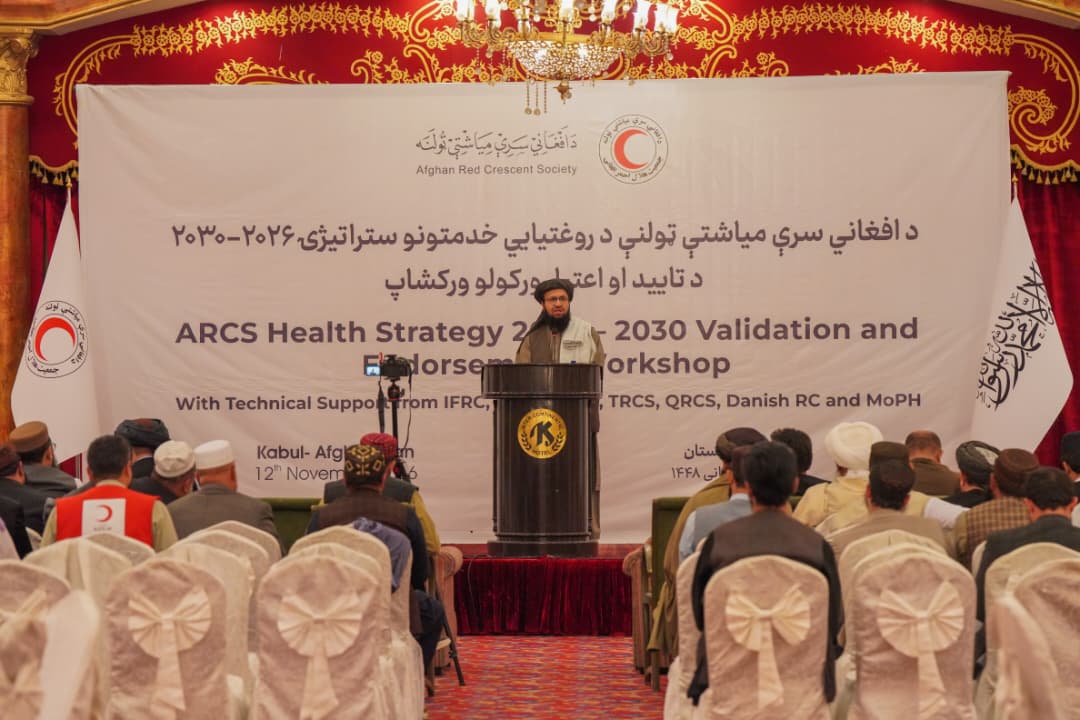
Thursday, November 12, 2026
The ARCS Department of Health Services held a workshop to validate and endorse its Health Strategy 2026–2030. The workshop was attended by the organization’s leadership, advisors to the General President, officials from the central headquarters and regional offices, international partners, and representatives of relevant organizations.
Dr. Abdullah Irfan, Director of ARCS Health Services, welcomed the participants and said the strategy had been developed to ensure that health services are delivered in a more organized and effective manner and in line with people’s needs. He highlighted the important technical and financial support provided by partners, particularly the Norwegian Red Cross, during the development of the strategy.
Sheikh-ul-Hadith Shahabuddin Delawar, General President of the ARCS, welcomed the development of the strategy and stressed that it should not remain merely a document but must be put into practice through serious and effective measures. He urged officials to familiarize themselves with its objectives, monitor and evaluate activities in line with the established plans, and timely respond to people’s health needs.
ARCS Vice President Hafiz Azizur Rahman said that implementing the strategy would help organize the delivery of health services, ensure more effective use of available resources, and provide a clear framework for priorities and future activities.
Hossam Faysal, Head of the IFRC Delegation in Afghanistan, described the development of the strategy as an important step. He emphasized that coordination and joint efforts among all partners are essential to addressing the country’s health and humanitarian challenges.
Patrick Niriho, Health Coordinator at the ICRC in Afghanistan, also addressed the participants. He said the ICRC stands ready to support the ARCS with any changes, revisions or technical assistance needed during the strategy’s implementation. He added that the ICRC would continue supporting ARCS activities in other areas of health as well.
Dr. Enack, Health Coordinator at the Norwegian Red Cross in Afghanistan, also highlighted the importance of the strategy. He noted that displaced people, returnees, children suffering from malnutrition, and women’s health needs require special attention and effective services. He reaffirmed the Norwegian Red Cross’s commitment to continuing its cooperation with the ARCS in delivering health services.
The strategy has been developed to guide and organize the ARCS’s health services activities, priorities, and future plans for the period 2026–2030.
