ARCS and UNAMA Emphasize Support for Families Affected by the Hardships of the Past Two Decades
Thursday, October 22, 2026
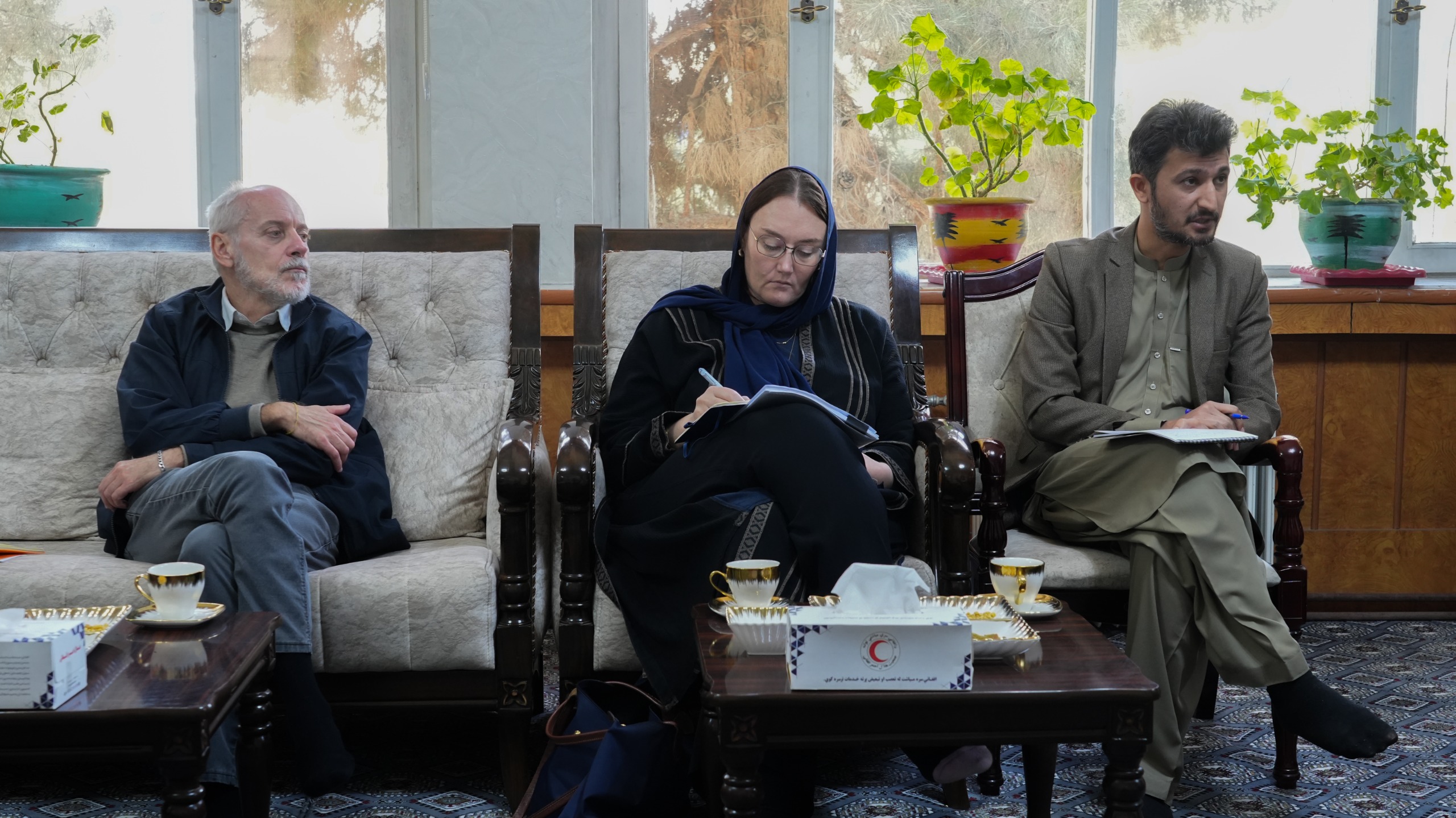
Sheikh-ul-Hadith Shahabuddin Delawar, General President of the ARCS, and Vice President Hafiz Azizur Rahman met with Fiona Fraser, UNAMA Chief of Human Rights, and her accompanying delegation to discuss support for individuals and families affected by the hardships of the past two decades and the coordination of humanitarian assistance.
During the meeting, Mr. Delawar provided an overview of the Society’s humanitarian services and relief programs. He explained that the ARCS delivers healthcare and other humanitarian services to people in need, disaster-affected people, families without guardians, and patients through its seven regional offices and 34 provincial branches across the country. He added that activities in these areas are ongoing.
Mr. Delawar noted that the hardships of the past two decades had left many families without guardians, caused psychological difficulties for some individuals, and led others to become addicted to drugs. He stressed that these families and individuals require targeted support and humanitarian assistance, and that appropriate measures should be taken according to their needs.
He assured UNAMA officials that the ARCS is ready to cooperate and coordinate in every possible way to organize and deliver assistance to vulnerable people across the country. He emphasized that assistance received by the Society is delivered to eligible families effectively, systematically, and transparently, in line with people’s needs and requests.
Ms. Fraser praised the ARCS’s humanitarian services and its ongoing efforts to support people in need. She emphasized the importance of addressing the needs of individuals and families affected by past hardships, continuing to support them, and improving the effectiveness of humanitarian assistance.
At the conclusion of the meeting, both sides emphasized the need for greater coordination and cooperation to support affected individuals and families, expand humanitarian services, and assist people in need.
