Kabul: Five-Day Exhibition for Marketing Products of ARCS Beneficiaries Opens
Monday, April 27, 2026
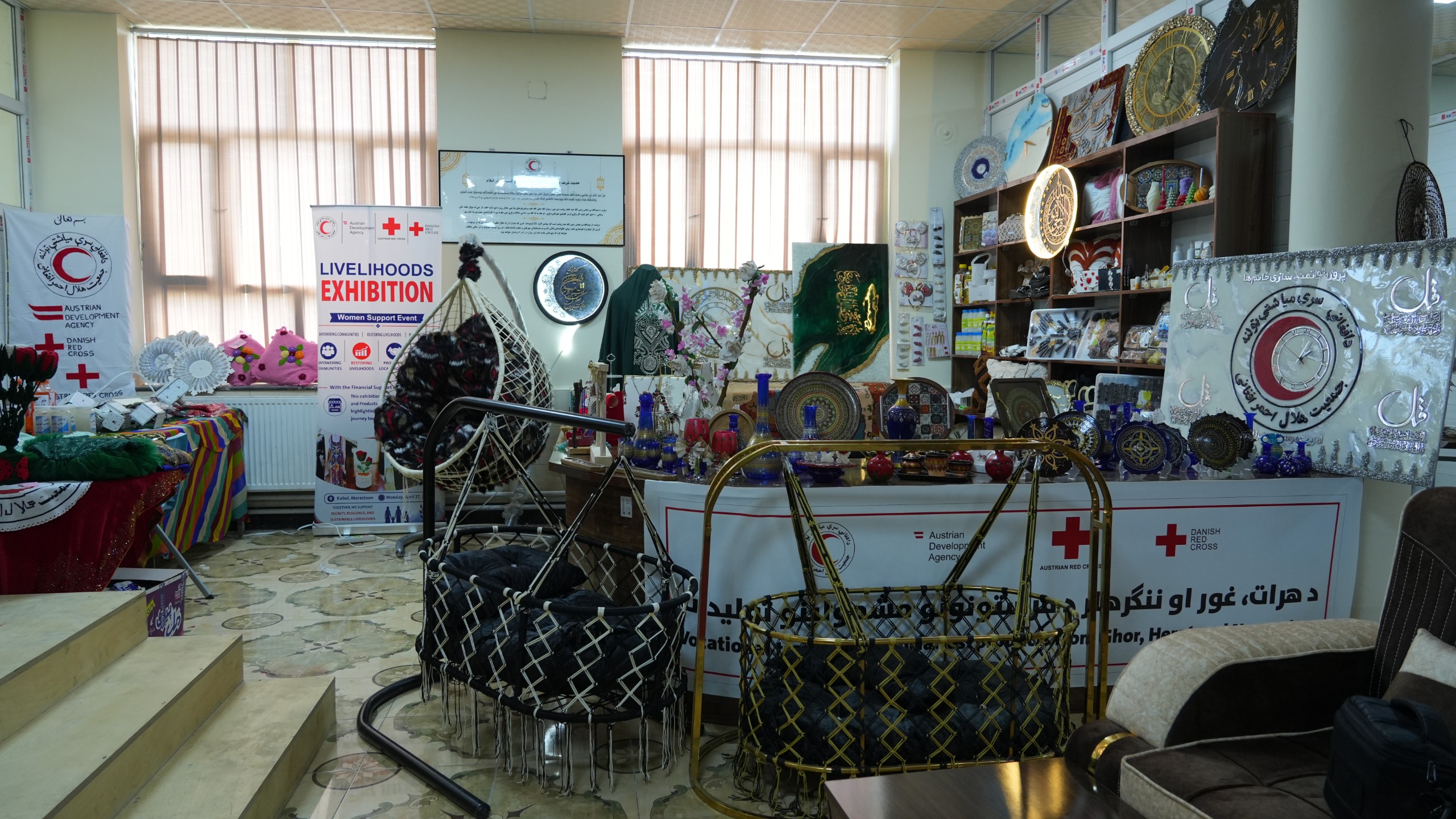
A five-day exhibition aimed at marketing and supporting the products of residents of the central Marastoon and vulnerable families has been launched by the ARCS.
The opening ceremony was attended by Sheikh-ul-Hadith Shahabuddin Delawar, General President of the ARCS; the Under-Secretary General for Operational Affairs; a number of central directors and advisors; as well as Mr. Hossam Faisal, Head of the IFRC Delegation in Afghanistan, representatives of the Turkish and Qatari Red Crescents, the Norwegian and Danish Red Cross societies, and the ICRC.
At the ceremony, Mr. Delawar stated that the exhibition was organized to support the marketing of beneficiaries’ products and to enhance the value of their work and efforts. He added that the ARCS is working to ensure that vulnerable and female-headed families do not remain solely dependent on aid, but instead become self-reliant through vocational training and practical work.
He also expressed his appreciation to all national and international partners for their cooperation with the ARCS in this regard and voiced hope that such supportive programs will be further expanded to reach more families.
Mr. Faisal and his Deputy, Ms. Homa Nader, praised the initiatives of the ARCS and emphasized that the IFRC will continue to support such programs through vocational training, as well as financial and technical assistance.
Subsequently, Mawlawi Sayed Ahmad Bahramand, Head of the Marastoons, provided information on the objectives of the exhibition and the products prepared by beneficiaries. He stated that, in addition to the central Marastoon, the exhibition offers marketing opportunities for products from Herat, Kandahar, Nimroz, Ghor, Balkh, and Kunduz provinces, enabling beneficiaries to sell their goods at reasonable prices and move toward self-reliance.
It is worth noting that the exhibition showcases handicrafts produced by beneficiaries and vulnerable families, including embroidered garments, carved items, handwoven carpets, women’s clothing, and food products such as pickles, jams, cookies, and cakes.
