Kabul: ARCS Holds Talks with Austrian and Danish Red Cross Societies on Humanitarian Cooperation
Saturday, October 17, 2026
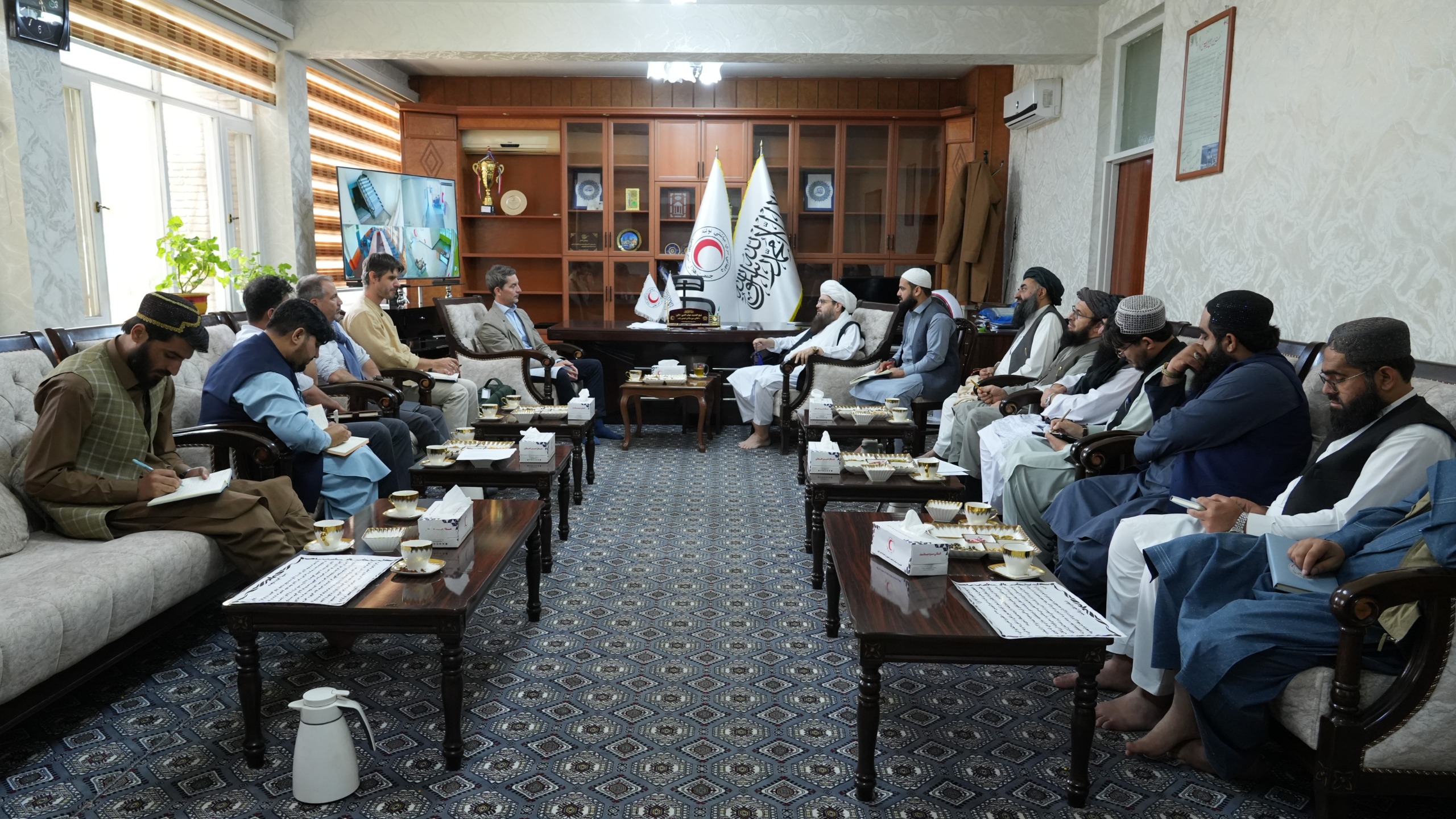
Sheikh-ul-Hadith Shahabuddin Delawar, General President of the ARCS, and Vice President Hafiz Azizur Rahman met with representatives of the Austrian Red Cross and the Danish Red Cross to discuss humanitarian assistance, support for vulnerable families, and efforts to promote self-reliance among returning Afghan refugees.
The meeting was attended by Walter Hajek, Head of International Cooperation at the Austrian Red Cross; Fabrice Vandeputte, Deputy Head of Region for Asia and Europe at the Danish Red Cross; Christopher Bachtrog, Austrian Red Cross Program Manager for Afghanistan; and Mohammed Alshamaa, Head of the Danish Red Cross in Afghanistan.
Mr. Delawar welcomed the guests and thanked them for supporting the Afghan people through difficult times and providing humanitarian assistance. He particularly commended their humanitarian support following the earthquake in Kunar, noting that decades of hardship had left many Afghans facing serious challenges and in need of extensive humanitarian assistance.
He also outlined the ARCS’s healthcare, humanitarian, and educational services. He noted that the needs of vulnerable families increase as winter approaches and stressed the importance of providing sufficient assistance to meet those needs. He assured the guests that aid delivered through the ARCS reaches eligible recipients transparently.
Mr. Hajek praised the humanitarian services and activities of the ARCS and provided an update on ongoing Austrian Red Cross programs. He explained that, with financial support from the Austrian Development Agency and technical cooperation between the Austrian and Danish Red Cross societies, three mobile health teams would receive support through the ARCS in Herat, Ghor, and Nangarhar provinces from early 2025 through June 2027.
He added that livelihood support programs are also being implemented for 1,400 women without guardians. These programs provide vocational training and help create opportunities for women to establish small businesses. He also highlighted the continuation of mental health and psychosocial support services.
Mr. Hajek reaffirmed the commitment to long-term cooperation, noting that the Austrian and Danish Red Cross societies planned to jointly launch a new project in the near future to promote self-reliance among returning Afghan refugees, enabling them to become more self-sufficient and meet their families’ needs.
The Deputy Head of Region for Asia and Europe at the Danish Red Cross said that the organization had developed a five-year humanitarian strategy in which Afghanistan held an important place. He assured the ARCS that the Danish Red Cross would continue its humanitarian cooperation with the Society, as it had in the past.
